

There is a particular kind of grief that comes with a beloved building closing its doors especially one that holds an entire state’s identity within its walls.
For nine years, the Penang State Museum and Art Gallery on Lebuh Farquhar stood quiet. Scaffolding went up, came down, went up again.
A pandemic arrived and stalled everything for another two and a half years. Contractors changed hands. The building — a Category One heritage structure under the UNESCO George Town World Heritage Site, which meant every restoration decision had to be made slowly, carefully, and in full conversation with its past — demanded time that no one could rush.
On 24 July 2026, it finally opened again.
And it was worth the wait.
A Building That Has Always Been More Than a Museum
Before it was a museum, it was a school.
Built in 1896 and expanded in 1906, the Lebuh Farquhar building first housed Penang Free School before serving as Hutchings School. It was only in 1965 — following a proposal that had the support of Malaysia’s first Prime Minister, Tunku Abdul Rahman — that it was officially converted into the Penang State Museum. The building has, in other words, been in the business of education for well over a century. The form has changed. The mission has not.
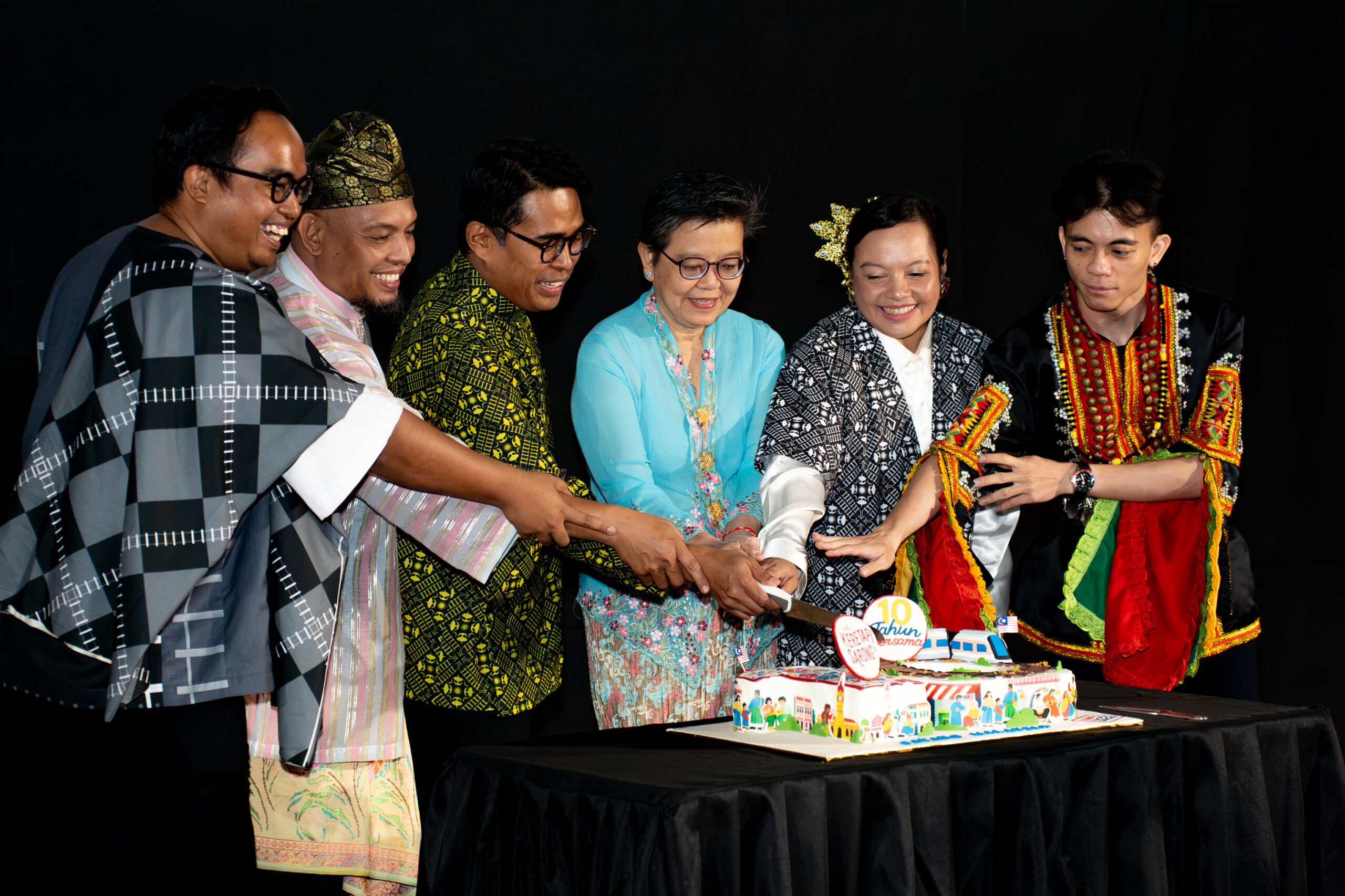
The museum was officially reopened by the Yang di-Pertua Negeri Tun Ramli Ngah Talib, with Chief Minister Chow Kon Yeow describing the restoration as a testament to the state’s conviction to preserve its history, heritage and identity.
It is a statement worth taking seriously. A RM18 million commitment to a single heritage building, across nine years and through a global pandemic, is not a casual one.
What Nine Years of Restoration Looks Like
State tourism and creative economy committee chairman Wong Hon Wai said the restoration took time as the museum was housed in a Category One heritage building which required specialist work, and that the project was also delayed for about two and a half years during the Covid-19 pandemic, when construction stopped and the contractor faced difficulties obtaining imported material.
Work proceeded in phases, starting with structural repairs to the roof, water leakage and toilets, before moving to interior design and exhibition fit-out. Last year, the Penang Public Works Department issued a notice of non-compliance to the contractor over delays, and a new contractor was appointed to complete the remaining works.
Even after the building was handed over, the work was not done. Museum director Haryany Mohamad said her curatorial team needed four months to install the artefacts and complete the displays.
That is the part that often gets left out of reopening announcements — the quiet, unglamorous labour of people who care deeply about objects that most of the world will walk past without stopping. Four months of hands placing 1,200 artefacts into position, arranging light, writing captions, making decisions about what goes where and why. That work matters.
What You Will Find Inside Now
The upgraded museum features 15 galleries showcasing nearly 1,200 artefacts, with the incorporation of technology including high-definition projection, interactive kiosks, simulators and motion sensors designed to make learning about history more engaging, particularly for the younger generation.
Among the key additions are cashless payment systems, self-service kiosks and augmented reality experiences. The museum also features AI-assisted interpretation and audio-visual presentations.
The collection itself spans the full breadth of Penang’s remarkable history — from prehistoric discoveries at Gua Kepah to the state’s development before and after independence, including a section showcasing the remains of the building’s bombed portion during World War II.
That last detail is quietly significant. The building itself carries a scar from the war — and rather than conceal it, the museum has chosen to make it part of the story. That is good curatorial instinct. Heritage is not only what is beautiful. It is also what endured.
Perhaps the most visitor-friendly change, and the one most likely to matter for how the museum reaches new audiences: unlike in the past when photography was restricted, the museum now allows visitors to photograph exhibits and share their experiences on social media. Museum director Haryany Mohamad framed this not as a concession but as a strategy — noting that visitors today naturally want to document and share their experiences, and that the museum sees this as a positive way to introduce itself to a wider audience.
She is right. In 2026, a museum that refuses photography is a museum that has decided to opt out of the most powerful word-of-mouth network in human history. Penang State Museum has chosen otherwise.
Go Now – Admission is Free Until 31 August
The museum is offering free admission for all visitors until 31 August 2026, with the state government targeting at least 2,500 visitors each month, or around 30,000 annually, following its reopening.
The museum operates Saturday to Thursday. It sits at Lebuh Farquhar, in the heart of George Town — walking distance from most of the city’s heritage corridor, and easy to fold into any Penang itinerary that takes the island’s history seriously.
A second branch of the Penang State Museum is also set to open at No. 57 Macalister Road in September, focusing on the state’s ethnic diversity. That is a story we will be watching closely.
Why This Matters Beyond Penang
At LOCCO, we cover culture and heritage not because it is a nice category to have, but because we believe the stories a place tells about itself determine how confidently it moves into the future.
The Penang State Museum’s reopening is not merely an event for Penangites. It is a signal — that a government can invest patiently in a single heritage building across nearly a decade, absorb delays, change contractors, navigate a pandemic, and still see it through to completion. That the building that comes out the other end is not a sterile replica of the past, but a living institution that has chosen to meet its visitors where they are — with technology that engages, policies that welcome, and a collection that does not flinch from the difficult parts of its own story.
George Town is a UNESCO World Heritage Site because it holds something irreplaceable. The Penang State Museum, reopened and renewed, is now once again one of the most important places to understand what that means.
Go. Bring your phone. Photograph everything.
And take your time/LOCCO